Behind the Album
Re-Sounding
2000 / 2026 Remaster · Brian Grace
14
Tracks
3
Cities
1
Artist
2000
Released
Behind the Album
Re‑Sounding is the rock/pop counterbalance to Explorations - the 1970s‑rooted, 1990s‑energized, guitar‑driven, vocal‑forward side of Brian Grace’s musical identity. After closing the jazz chapter of his 1990s with Explorations, Brian turned to the other half of himself: the rock/pop songwriter shaped by the decade’s turbulence, emotional intensity, hard‑edged guitar work, and flashes of grunge‑leaning attitude. Influenced by ’90s artists like Beck, Alanis Morissette, Nirvana, Pearl Jam, Red Hot Chili Peppers, and Radiohead, yet grounded in the melodic expressiveness of the ’70s, he absorbed the era’s angst but filtered it through his own voice - never imitating, always reshaping.
As his second album, Re‑Sounding offers the clearest window into Brian’s rock/pop persona before his later leap into prog‑jazz and fusion. Aggressive riffs and raw emotion sit alongside heartfelt ballads and introspective moments, capturing a period of personal upheaval and artistic searching. The result is a rare snapshot of Brian in transition - bold, vocal‑forward, guitar‑driven, and unfiltered.
The Meaning Behind the Title
The title Re-Sounding is a deliberate play on words - a double meaning that reflects exactly where Brian Grace stood at the turn of the millennium. After releasing Explorations in 1999, Brian turned to the other half of his musical identity: the rock/pop songwriter who had been just as active, just as passionate, and just as expressive during that same decade.
The Surface Reading
"Re-Sounding" as in resounding - bold, loud, confident. A resounding musical response.
The Deeper Meaning
Re- as in redoing, reshaping, redefining. Sounding as in finding a new voice after a decade of dual musical identities.
"Here is the other side of me.
Here is the sound I'm revisiting, reshaping, and reclaiming."
- Brian Grace, on the title of Re-Sounding
About the Album
The One-Man Band
Every instrument. Every vocal harmony. Every arrangement. Every lyric. All Brian. Re-Sounding is a true one-man-band record - written, performed, produced, and sung entirely by Brian Grace. The stacked background harmonies, the hard-edged guitar work, and the raw emotional core all spring from the same singular creative voice.
The mp3.com Era
Originally released on mp3.com in 2000, Re-Sounding was the final chapter of Brian's early DIY rock era - closing out a decade of raw creativity before his full commitment to jazz and fusion. The 2026 Remaster restores the album to its rightful place in the corrected chronology, between Explorations (1999) and Hodgepodge Jazz Garage (2001).
Influences & Roots
While shaped by the energy and angst of 1990s rock, the songwriting foundation of Re-Sounding is unmistakably rooted in the melodic, expressive sensibilities of the 1970s. Brian, who also refers to himself as probably “the quintessential Gen X'er,” absorbed the decade's attitude but filtered it through his own voice - never imitating, always reshaping.
70s Melodic Foundation
90s Rock Energy
The Todd Rundgren Turning Point
Discovering Todd Rundgren's music in 1989 became a defining moment. Todd's adventurous songwriting and fearless genre-blending left a deep imprint on Brian's rock/pop writing throughout the decade and beyond - an inspirational thread that runs through Re-Sounding from the first track to the last.
Where the Songs Were Born
Re-Sounding came together across three cities, each shaping its rock/pop identity.
San Francisco, CA
Lyric intensity and emotional depth - the heart of Brian's 1990s writing.
Destiny · Track 2
In the Garden · Track 3
I’m a College Dropout · Track 4
I’m a College Dropout (Rap) · Track 5
So Wrong · Track 8
Feed Me Consolation · Track 10
Helloweird · Track 11
Rise of the Midnight Son · Track 13
Somehow, Someday · Track 14
Augusta, GA
Restless creative energy - early versions and transitional writing.
Love’s Great Highway · Track 1
(I Can’t Get You) Out of My Mind · Track 6
Can You Feel My Heart? · Track 7
San Diego, CA
mp3.com era - production, finishing touches, and final mixes.
Drowning · Track 9
Laughing Out Loud · Track 12
Visual Archive
Photos, session images, and rare visual artifacts from the years surrounding Re-Sounding.
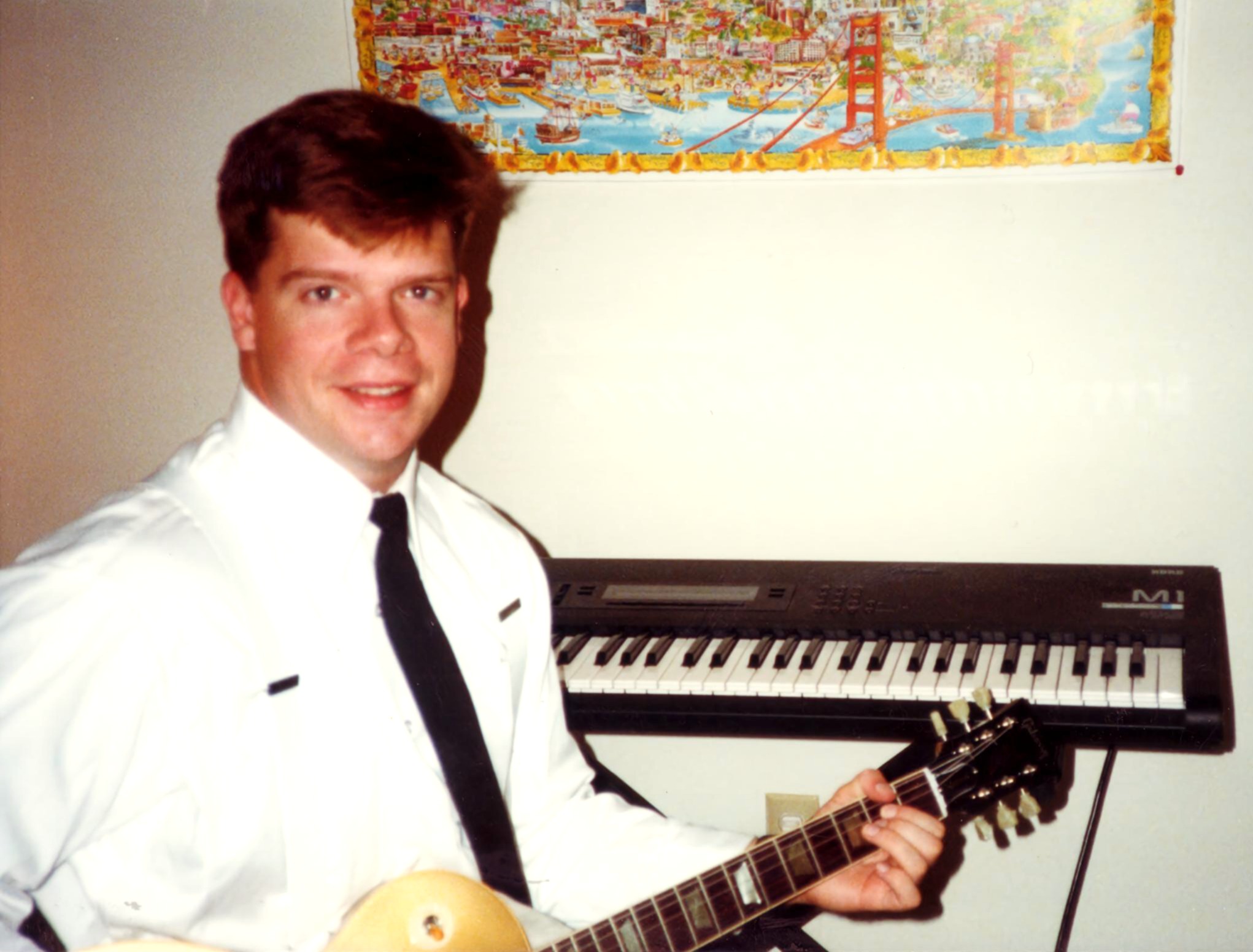
Brian recording guitar at home after a formal Army Band gig in late 1992.
Presidio of San Francisco on-base Army Housing
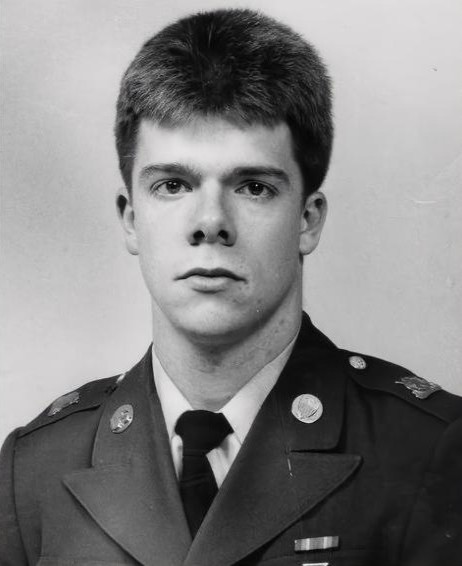
Official Army Promotional Pic - 1993.
Presidio of San Francisco
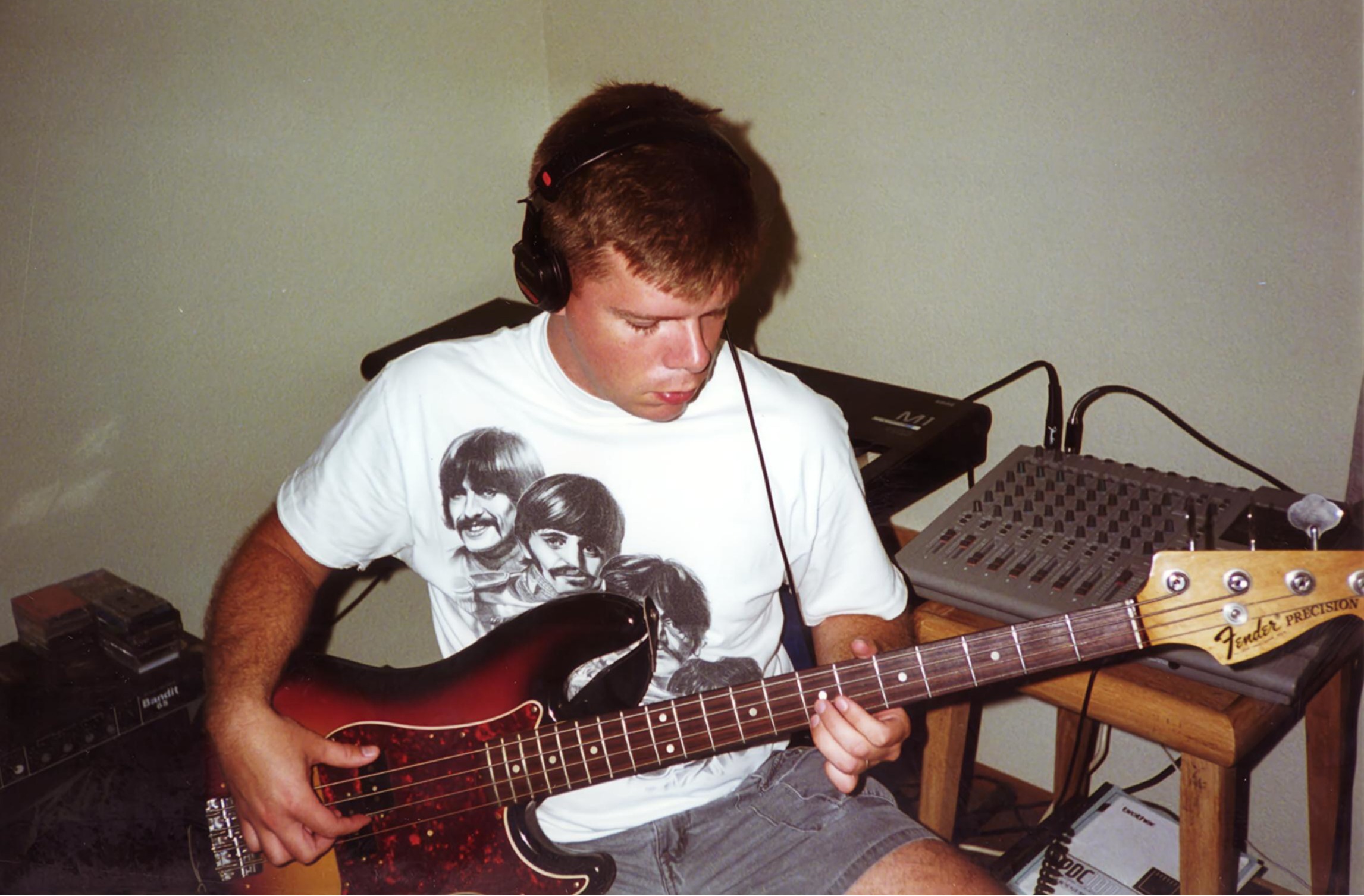
Recording bass for “In the Garden” - Summer of 1994.
Presidio of San Francisco
Six Frames from the San Francisco Season That Shaped Re-Sounding

Early “calling card” concept - San Francisco, 1994

Standing portrait with guitar - San Francisco, 1994

Portrait study, no instruments - San Francisco, 1994

Second portrait study - San Francisco, 1994

Mixing at the Tascam 488 Portastudio with the Korg M1 nearby - San Francisco, 1994

In the "true" rock spirit - San Francisco, 1994
From Sessions to Release
The black-and-white San Francisco images capture Re-Sounding in motion - the home-studio years when the songs were still being written, recorded, and shaped. The color cover-shoot photos belong to a later chapter: San Diego, 2000, when the album moved from private creation into its official mp3.com-era release identity.
Six years separate these visual worlds, but together they show both sides of the album’s history: the raw creative period that formed the music, and the finished visual identity that introduced it to listeners.
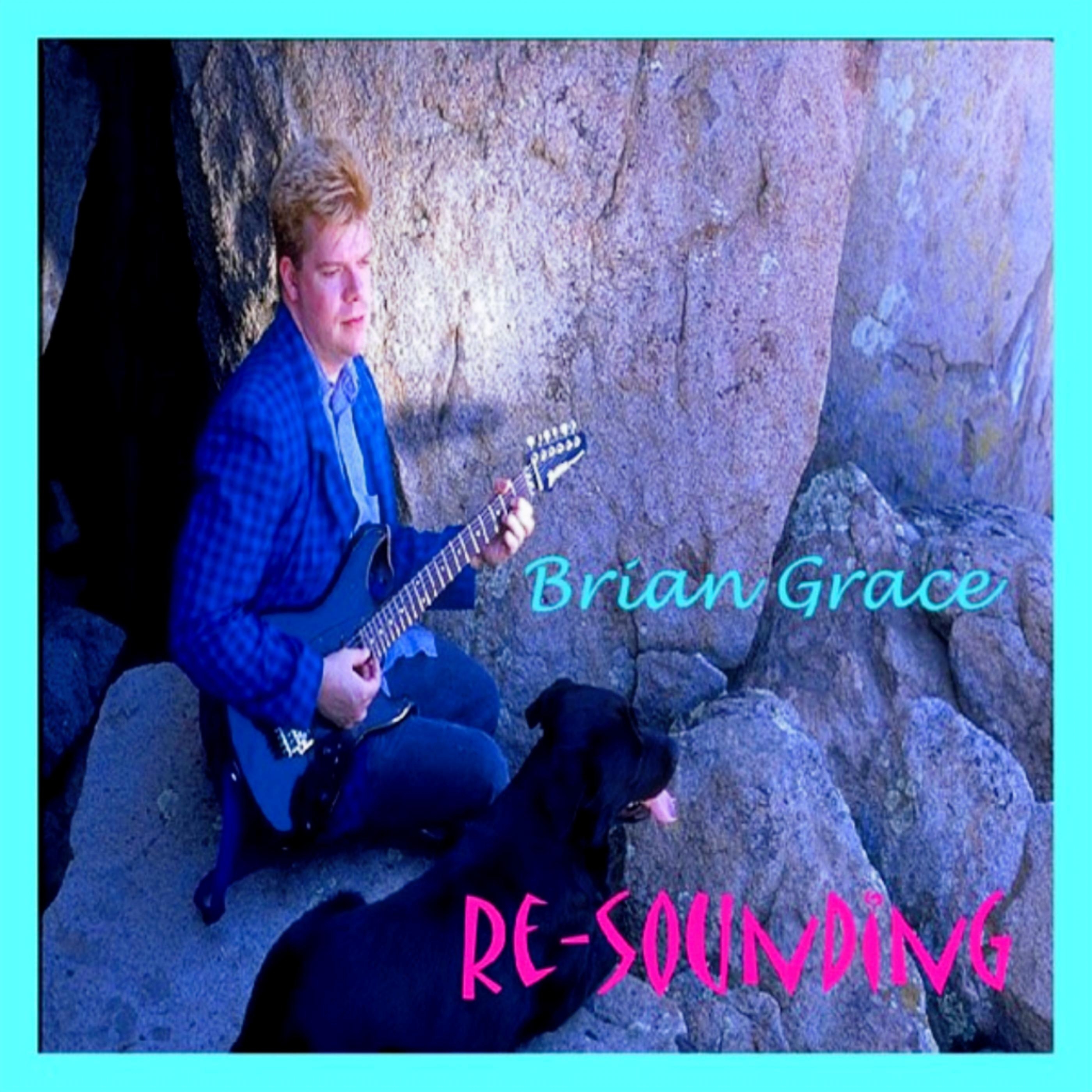
Re-Sounding Photo Cover Shoot - San Diego, CA - 2000


From the Vault
The Original 2000 Back Cover
Re‑Sounding was released exclusively on mp3.com in 2000 - a fully digital album at a time when online distribution was still new. If a physical CD had existed, this is how its back cover might have looked: a conceptual artifact built from the original track sequence and era aesthetic.
A glimpse of what might have been - same music, different medium.
From the Archive to the Songs
The visual archive closes the album’s outer story: the places, images, and artifacts surrounding Re‑Sounding as it moved from private creation to its mp3.com-era release identity. What follows is the inner story - the songs themselves.
Each track on Re‑Sounding carries a piece of the larger journey: San Francisco’s emotional depth, Augusta’s uneasy transition, and San Diego’s final polish. Together, they trace a cross-country album written in motion, shaped through upheaval, and finished at the edge of the Pacific.
From here, the album moves track by track through the places, moods, and moments that shaped it — beginning, fittingly, on “Love’s Great Highway.”
Track-by-Track
A closer look at the stories, sessions, and moments behind each track.
Track 1 · 05:25
Love’s Great Highway
Written 1995 · Recorded 1996 · Augusta, GA
Love’s Great Highway was written in a moving car on an actual highway, into a camcorder propped on the passenger seat - improvised, shaped, and built as the country scrolled past the windows on the long drive between San Francisco and Augusta, Georgia.
For three years, from 1992 to 1995, Brian had been stationed at the Presidio of San Francisco as a member of the 6th Army Band, playing in one of the most remarkable settings any musician could ask for: golden hills above the bay, fog rolling in off the Pacific, and a world-class city on every side. When the post was decommissioned, his next assignment took him to Fort Gordon in Augusta - a flat, sweltering, insect-laden Army post in the Deep South. He had a name for it almost immediately: Disgusta.
He finished the song once he arrived in Augusta, recording it in the temporary house where he lived during that final Army year. Those same sessions also produced Can You Feel My Heart? and captured the first incarnation of Exploration, later developed for the 1999 Explorations album and revisited on the 2022 Long Beach EP. They also marked the beginning of Slink, which Brian would later rewrite and re-record with his Los Angeles “monster band” for 2017’s Stratosphere EP. Augusta may have been Disgusta, but something unusually productive was happening inside those walls.
The song is unusually relaxed by Brian’s own description - especially considering his more manic creative energy at the time. The concept is romantic, and a little funny once the backstory is known: he is inviting a girlfriend to travel life’s great highway with him, even though he was alone in the car, crossing the country from a place he loved to a place he dreaded.
That imagined companion became part of the song’s emotional center. Before the album’s guitars, attitude, and emotional weight fully arrive, the highway appears - and the record is already moving.
Track 2 · 05:10
Destiny
Recorded 1993 · Presidio of San Francisco, CA
Destiny opens with more than a minute of pure instrumentation - not an accident, but a deliberate setup. The music has a question to ask before the words arrive.
That question was personal. For a man in his mid-twenties weighing the uncertainty of a musical life, the big intangibles felt urgent: how much of where you end up is your own doing - and how much belongs to the people around you, to timing, to luck? The song does not pretend to resolve it so much as name it honestly: Am I clear enough, am I near enough - will I see the light, is the timing right?
The music itself runs on a parallel quest, tracking the same restless arc as the words. But the conclusion, when it finally lands, cuts through: Follow yourself or lose your soul. The only fate worth having is the one you build yourself.